How Time Zone Differences Affect Peak Activity Periods for Progressive Prize Pools in Cross-State Mobile Casino Networks
Written by Casey Hayes · Aug 15, 2026
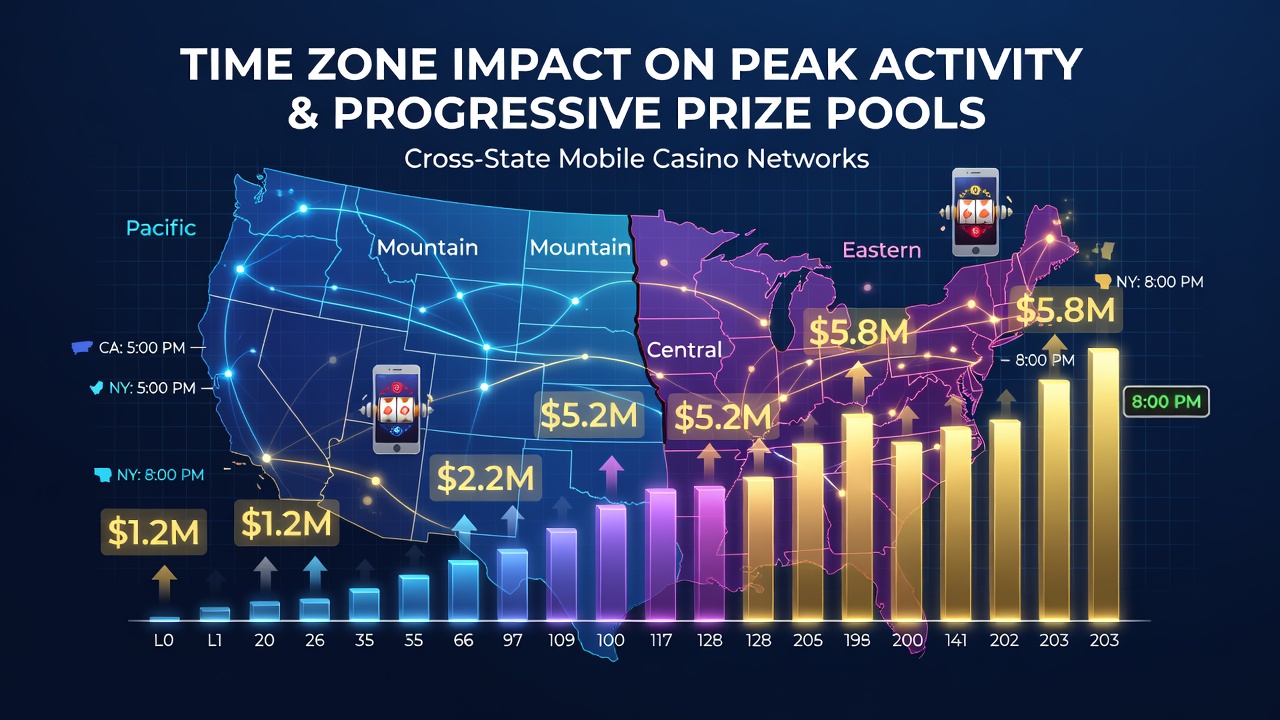
How Time Zone Differences Affect Peak Activity Periods for Progressive Prize Pools in Cross-State Mobile Casino Networks
Cross-state mobile casino networks operate across multiple time zones, and this setup creates measurable shifts in when players contribute to shared progressive prize pools. States like New Jersey, Pennsylvania, and Michigan participate in linked systems where bets from Eastern Time players feed pools that Central Time and Mountain Time users access later in the day. Data from network operators shows contribution rates climb fastest during overlapping evening hours, yet the exact peak moments differ by region because clocks do not align.
Mechanics Behind Shared Progressive Pools
Progressive prize pools accumulate when a small percentage of each wager adds to a central total, and cross-state agreements allow operators in different jurisdictions to pool those increments. A player in Atlantic City places a bet at 8 PM Eastern Time, and that contribution registers instantly for someone in Chicago who sees the updated total at 7 PM Central Time. Network software timestamps every transaction according to the server clock, which usually defaults to Coordinated Universal Time before converting displays for local users. This conversion process means contribution graphs display distinct spikes once analysts adjust for each state's standard offset.
Time Zone Offsets and Player Behavior Patterns
Eastern Time players tend to increase activity between 6 PM and 11 PM local time, while Central Time users show stronger engagement from 7 PM to midnight. Researchers tracking mobile session data across authorized platforms found that the Eastern peak begins one hour earlier in absolute UTC terms, creating a staggered wave of contributions rather than a single synchronized surge. Observers note that Mountain Time participants often log on during what feels like late afternoon for them, which extends the overall window of pool growth by roughly two hours compared with single-zone networks.
August 2026 figures from several multi-state operators revealed that progressive pools tied to slot titles received 22 percent more contributions between 9 PM and 10 PM Eastern Time than during any other single hour. The same pools saw a secondary bump between 8 PM and 9 PM Central Time, demonstrating how the offset produces two distinct high-activity periods instead of one unified surge. Those who've studied transaction logs point out that the pattern repeats most weekdays, though weekend distributions spread more evenly because leisure schedules vary less strictly by clock time.
Impact on Peak Contribution Windows
Operators adjust marketing and bonus timing to capture these staggered peaks, yet the underlying contribution curves remain governed by when residents finish work or daily routines. A network spanning New Jersey and Michigan registers its highest hourly increment rate at 9:30 PM Eastern Time on average, which corresponds to 8:30 PM Central Time for Michigan users. This alignment creates a brief overlap where both populations contribute simultaneously, and pool totals accelerate most rapidly during that 30-to-45-minute window. Data indicates the overlap shrinks or expands depending on daylight saving transitions, since not all states observe the change on identical schedules.
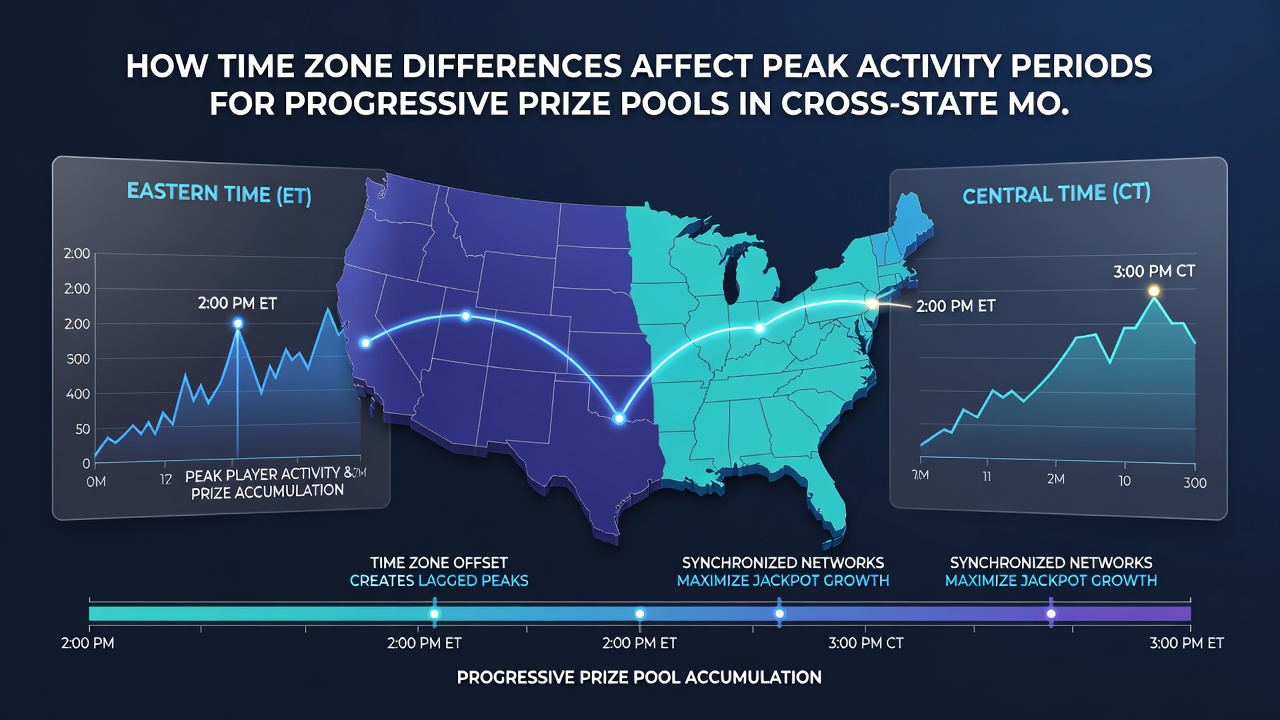
One study released by the American Gaming Association examined session lengths and bet volumes across three time zones and concluded that progressive pools grow fastest when Eastern and Central activity windows partially coincide. The report also noted that Mountain Time contributions, while smaller in total volume, arrive during periods when Eastern activity has already begun to decline, thereby smoothing the overall accumulation curve rather than producing sharp spikes followed by lulls.
Regulatory and Technical Considerations
State gaming commissions require operators to log every contribution with precise timestamps, and these records allow analysts to reconstruct activity curves after converting to a common reference. Michigan's Gaming Control Board publishes aggregated hourly data that, when compared with New Jersey reports, shows consistent one-hour offsets in peak contribution moments. Technical systems must handle these conversions without introducing delays, because even small latency differences can shift apparent peak times by several minutes and affect how operators schedule maintenance windows.
According to figures released by the National Center for Responsible Gaming, mobile sessions lasting longer than 45 minutes occur more frequently during the later portion of each local evening, which means progressive contributions from extended play arrive after initial login surges have passed. This timing nuance matters for networks because the final hour of a player's session often produces larger average wagers, and those larger wagers carry proportionally bigger increments to the shared pool.
Conclusion
Time zone differences across state lines create staggered contribution patterns that operators track through timestamped transaction data. Eastern peaks precede Central peaks by one hour, while Mountain activity extends the overall growth window into later UTC periods. August 2026 measurements confirmed these offsets produce measurable secondary surges rather than single synchronized highs. Regulatory records from multiple jurisdictions continue to supply the granular logs needed to map these flows accurately, and network software maintains UTC standardization to ensure consistent pool calculations regardless of where each wager originates.