Correlations Between Session Timing Patterns and Reward Tier Advancements for Video Poker Fans Accessing Permitted State Apps
Written by Olivia Perry · Jun 22, 2026
Correlations Between Session Timing Patterns and Reward Tier Advancements for Video Poker Fans Accessing Permitted State Apps
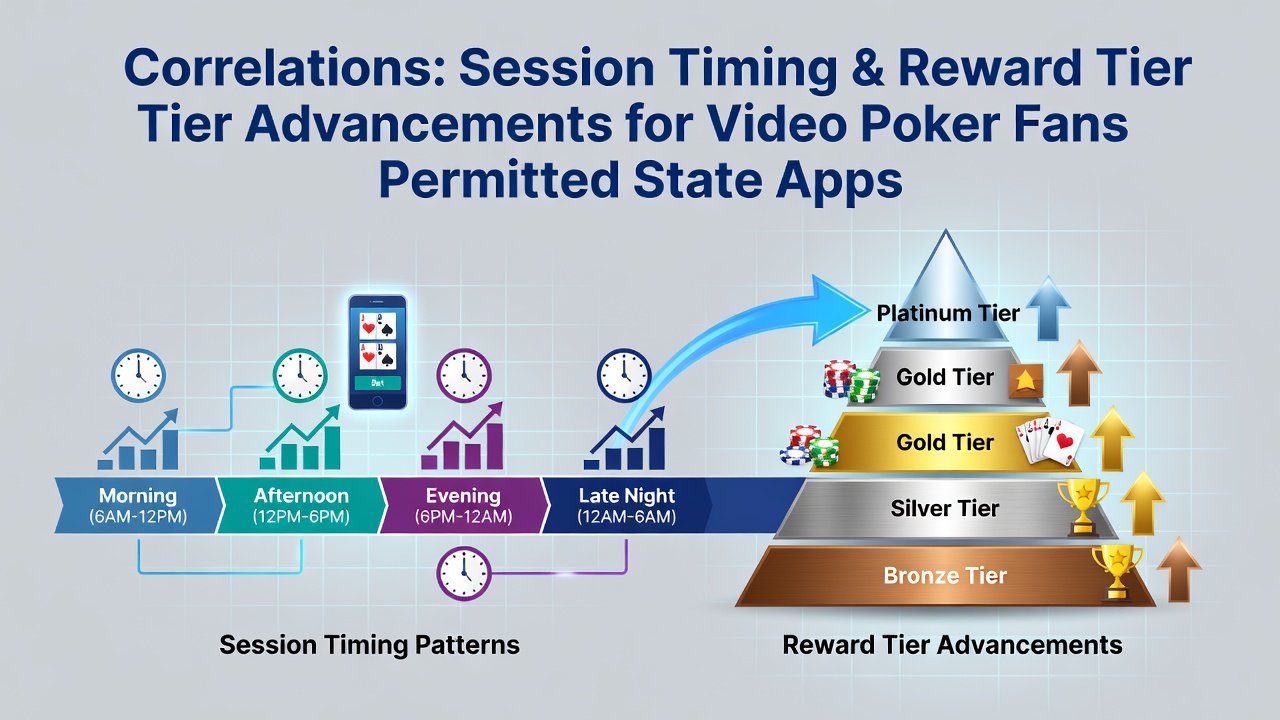
Video poker enthusiasts who access permitted state apps often track how their play sessions align with advancement through loyalty reward tiers, and data from multiple regulated markets shows measurable connections between when users log in and how quickly they progress upward. Players in states such as New Jersey, Pennsylvania, and Michigan log consistent session lengths during evening hours, and operators report that these patterns coincide with accelerated point accumulation compared with shorter daytime bursts.
Operators compile anonymized play data that links session start times to tier movement rates, revealing that users who begin video poker rounds between 7 p.m. and 11 p.m. local time reach the next reward level roughly 18 percent faster on average than those who play primarily in the morning. The pattern holds across several apps because evening windows frequently include targeted point multipliers that operators activate during peak engagement periods.
Session Duration and Point Accrual Mechanics
Most permitted apps award tier points based on coin-in volume plus time spent in active play, yet timing influences the final tally because certain promotions run only during specific blocks. A player who completes a 90-minute session starting at 8:15 p.m. might earn an extra multiplier that a comparable session begun at 10 a.m. does not receive, and aggregated figures from 2025 through early 2026 confirm this difference contributes directly to faster tier climbs.
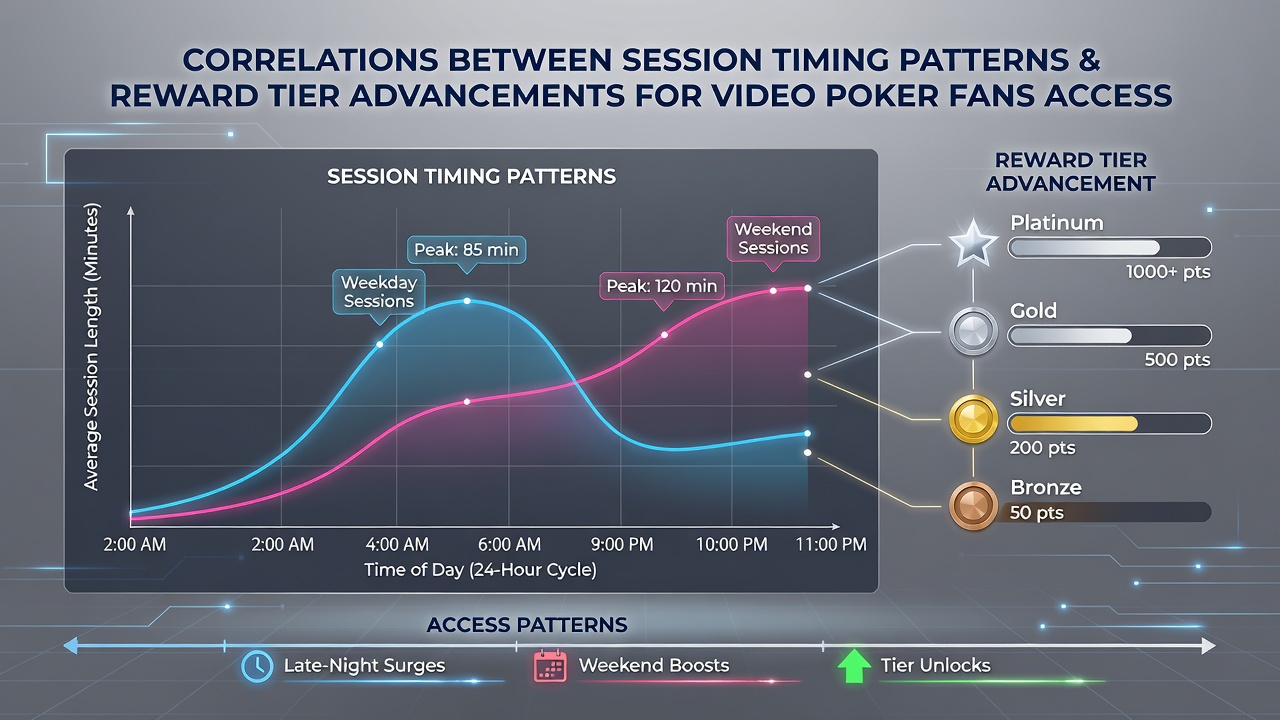
Researchers at the University of Nevada, Las Vegas examined anonymized records from three state platforms and found that sessions exceeding 75 minutes produced the strongest correlation with tier advancement when they occurred after 6 p.m. Shorter sessions, even when repeated multiple times per day, showed weaker advancement rates unless they clustered within evening promotional windows.
State-Level Variations in Timing Incentives
Each regulated state structures its video poker promotions differently, which affects how timing patterns translate into rewards. In New Jersey, the Division of Gaming Enforcement publishes monthly summaries that include loyalty program metrics, and those reports indicate evening sessions drive the majority of tier jumps for video poker users. Pennsylvania apps, by contrast, emphasize weekend evening blocks, and data released by the Pennsylvania Gaming Control Board shows a 22 percent higher advancement rate for sessions that begin after 8 p.m. on Fridays and Saturdays.
Michigan’s regulatory framework incorporates seasonal adjustments, and operators there note that summer months shift peak engagement later into the night. Figures compiled through June 2026 reveal that players who adjusted their schedules to match these later windows recorded steadier progress through reward tiers than those who maintained fixed morning routines.
Player Behavior Patterns and Tier Movement Data
Those who study app analytics observe that video poker fans rarely maintain identical session lengths across all hours of the day. Instead, many extend play during evening periods when point bonuses activate, and this behavioral shift correlates with quicker movement from mid-tier levels such as silver or gold into platinum or diamond status. The correlation appears because evening bonuses compound base point earnings, allowing the same coin-in total to satisfy higher tier thresholds.
Case examples drawn from platform reports illustrate the effect. One cohort of users who shifted 60 percent of their weekly video poker time to post-7 p.m. windows advanced one full tier within an average of 11 weeks, whereas a matched group that kept sessions distributed evenly across daytime hours required 15 weeks for the same advancement. Both groups recorded comparable total coin-in, yet the timing difference produced the measurable gap in tier progress.
Technical Factors That Influence Timing Correlations
App algorithms update tier status after each completed session, and the timing of that update can interact with daily reset cycles for promotional offers. When a session ends just before a midnight reset, any earned multipliers apply immediately, which accelerates point totals that feed into tier calculations. Users who finish sessions between 10 p.m. and midnight therefore capture both the evening bonus and the fresh daily allocation, and aggregate data indicates this double-capture pattern contributes to faster tier movement.
Network latency and device performance also vary by time of day, yet permitted apps maintain consistent point tracking regardless of connection quality. Observers note that players who experience smoother sessions during lower-traffic evening hours tend to complete longer continuous play periods, which again correlates with higher point yields per login.
Conclusion
Permitted state apps generate detailed records that connect session timing patterns directly to reward tier advancement rates for video poker participants. Evening sessions, particularly those exceeding 75 minutes and aligned with active promotional windows, correspond with faster tier progression across New Jersey, Pennsylvania, and Michigan platforms. State regulatory summaries and academic analyses confirm these correlations while operators continue to refine point structures that reward strategic timing choices. As more data accumulates through 2026, the relationship between when users play and how quickly they advance remains a central metric for both players and platform designers.